Tire Guide
Seasonal Tires Explained
All-season, all-weather, winter and summer tires are built for different temperatures, and the right pick depends on how you drive. Answer four quick questions or read the comparison to see what fits Maryland roads.
On This Page
Quick Answer
All-season tires handle most of a Maryland year, but when snow and ice arrive they are the weak link. If you can't stay home during a storm, choose winter tires, or at least an all-weather tire with the three-peak mountain snowflake mark. Summer tires trade winter ability for sharper warm-weather grip.
- A rough guideline: rubber in summer and all-season tires stiffens as temperatures settle near or below 45°F (7°C).
- The three-peak mountain snowflake mark means a tire passed a standardized snow-traction test. The M+S mark alone does not.
- Run one tire type on all four wheels, and swap winter and summer sets by the season.
- When a snow emergency is declared, Maryland law requires chains or snow tires on designated snow emergency routes.
Which Season Fits Me?
Pick the answers that match your driving and we'll point you to the tire type worth looking at first. It's a starting point, not a substitute for a conversation about your specific vehicle.
All-Season Tires
Balanced grip, a quiet ride and long tread life for wet roads and the occasional light dusting. It fits drivers who can truly stay home when a storm hits. If that's not you, an all-weather tire is worth a look, even if you rarely drive in snow.
Season Comparison
A general look at how each type tends to behave. Individual models vary, so treat High, Medium and Low as a comparison between categories rather than a rating of any one tire.
| How It Performs | All-Season | All-Weather | Winter | Summer |
|---|---|---|---|---|
| Warm Dry Grip | Medium | Medium | Low | High |
| Warm Wet Grip | Medium | Medium | Low | High |
| Cold Pavement (Below 45°F) | Medium | High | High | Low |
| Light Snow | Medium | High | High | Low |
| Deep Snow and Ice | Low | Medium | High | Low |
| Tread Life | High | Medium | Low | Medium |
| Year-Round Convenience | High | High | Low | Low |
Winter tires score Low on tread life because they wear quickly when driven in warm weather. Used only in the cold months, a set lasts far longer.
The Four Season Types
Each type is a different compromise between warm-weather comfort and cold-weather grip.


All-Season
Designed for wet and dry roads across most of the year, with light-snow ability. They favor a quiet ride and long tread life, and they are the most common factory tire in this country. They are not a substitute for winter tires in heavy snow or on ice.


All-Weather
Year-round tires that also carry the three-peak mountain snowflake symbol, so they have passed a severe-snow traction test. They sit between an all-season and a winter tire: better in the cold and snow than the first, a step short of the second.


Winter and Snow
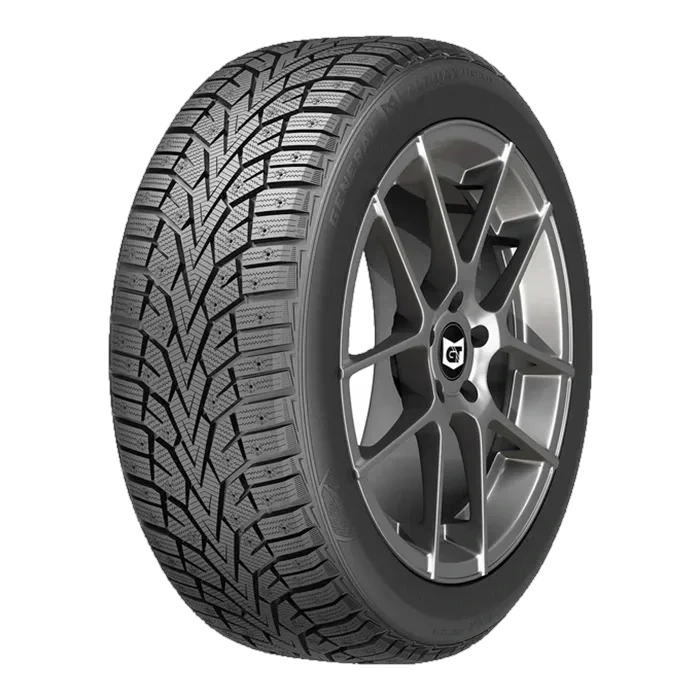
Soft, cold-tolerant rubber and tread packed with fine slits for grip on snow, slush and ice. They are the strongest choice when winter driving is frequent, and they are meant to come off when the weather warms.


Summer
Firmer rubber and shallow, stable tread for sharp dry and wet grip and precise steering in warm weather. They are not meant for snow, ice or freezing temperatures.
What the Snowflake Means
The three-peak mountain snowflake mark shows a tire passed a standardized snow-traction test. It is a stricter claim than M+S, which is a general mud and snow marking without a performance test behind it. Winter tires carry it, and so do some all-weather tires.

Rubber and Tread
Two things separate the categories: what the rubber is made of and how the tread is cut.


Rubber Compound
Winter tires use a compound that stays soft and flexible in the cold, which keeps the tread pressed into the road. Summer tires use firmer rubber that holds its shape and grip in heat. All-season and all-weather compounds aim for the middle.


Tread Pattern
Winter tread has deep grooves that bite into and clear snow and slush. Summer tread has large, stable blocks and fewer grooves for a bigger contact patch on dry and wet pavement. All-season patterns balance water evacuation with a quiet ride.


Sipes
Sipes are the thin slits cut across the tread blocks. On winter and all-weather tires they add many small biting edges for snow and ice. Summer tires have few, because extra slits soften the blocks and dull dry handling.
Temperature and Traction
Temperature affects a tire more than most drivers expect, and that is the real reason for seasonal choices.
A Guideline, Not a Switch
A common rule of thumb is 45°F (7°C). Below that, the rubber in summer and many all-season tires tends to stiffen and lose grip, while winter compounds keep working. It is a guideline, not a hard line, and how quickly a given tire changes depends on the model.- Left: Summer Compound
- Middle: All-Season With M+S
- Right: Winter With M+S And The Snowflake
Three tread blocks under the same load in a cold chamber. Above 45°F (7°C) all three flex. Below it the summer block stiffens and its gauge reads less flex, many all-season compounds stiffen partly, and the winter block keeps flexing while frost forms on the glass. The curves are illustrative, and 45°F is a rule of thumb, not a switch.
Braking
In cold and wet conditions, winter and all-weather tires generally stop shorter than a summer tire and often shorter than an all-season. In warm weather the order flips, and a summer tire tends to stop shortest.
Cornering and Steering
Summer tires give the crispest steering feel in warm weather. Winter tires have softer, taller-feeling tread, so they feel a touch less precise on dry pavement in return for grip in the cold.


The Trade-Off
No tire wins everywhere. Extra winter grip costs some dry-road sharpness and tread life, and extra summer grip costs cold-weather ability. All-season tires give up a little at each end for the convenience of one set.
Maryland Driving
Around Upper Marlboro we get humid summers, hard cold snaps, and winters that can bring real snow and ice. Last winter, drivers in this area absolutely needed winter tires.
Warm, Wet Summers
Heat and heavy downpours reward tires with good wet grip and healthy tread. Check tread depth before storm season.
Winters That Turn Serious
Snow days can be few, but when one hits, cold mornings, freezing rain and untreated side streets come with it. All-season tires are the weak link then, and an all-weather or winter tire earns its place.


Who Needs Them Most
Hills, back roads, steep driveways, early-morning shifts, or any job or duty you can't skip during a storm. If that's you, we recommend winter tires, or at least all-weather tires with the snowflake mark.
Snow Emergencies Change the Rules
Maryland has no year-round winter tire mandate. But when a snow emergency is declared, Maryland Transportation Article § 21-1119 requires chains or snow tires on designated snow emergency routes, and some counties declare their own. Studded tires are limited to vehicles registered in a few western counties. Rules can change, so confirm current local requirements.Why Not Mix Types
Putting different seasonal types on the same vehicle changes how the car behaves, often when you can least afford it.
- Different grip levels front and rear can make the car harder to predict when braking or turning on wet or snowy roads.
- A car with one axle on winter tires and the other on summer tires can lose control more easily than one with a matched set.
- All-wheel-drive systems work best when all four tires are the same size, brand and model, wearing about evenly.
- When you do replace only two tires, ask us where they should go and whether the pair matches the set already on the car.
Match All Four
For winter tires in particular, fit a full set of four. Winter tires on only the drive wheels leave the other axle with far less grip.

Swaps and Storage
Running two sets is simple when you plan the swap and know where the off-season set will live.


When To Swap
A common approach is to fit winter tires when daily highs settle near or below 45°F, often in late fall, and swap back when temperatures stay reliably above that in spring. Booking early avoids the first-snow rush.


How To Store
Store tires clean in a cool, dry spot out of direct sunlight and away from electric motors and power tools. Tires without wheels are usually kept upright; mounted sets are often stacked or hung. Mark each tire's position before you store it.


Before You Remount
Check tread depth, look for cracks or uneven wear, and set pressure once the tires are on the car. Our maintenance guide covers pressure, rotation and tread checks.
Seasonal Wheel Swap
Our booking form includes a Wheel Swap / Seasonal Change service, and our mobile tire service can do seasonal swaps too, so you can have them done where you are.Seasonal Tire FAQ
Keep Learning
Related Guides
Tire Type
Touring, performance, all-terrain, mud-terrain and LT tires compared.
Related Guides
UTQG Ratings
Treadwear, traction and temperature grades, and their limits.
Related Guides
Tire Maintenance
Pressure, rotation, tread depth, tire age and sidewall damage.
Shop Tires
Shop Winter Tires
Cold-weather compounds and siped tread for snow and ice.
Shop Tires
Shop All-Weather Tires
Year-round tires that carry the three-peak snowflake mark.
Shop Tires
Shop All-Season Tires
Comfortable, long-wearing tires for everyday driving.
Services
Book an Appointment
Pick a time for installation, rotation or a tire check.



Ready for the Right Season?
Tell us how you drive and we'll help you pick the tires, then swap them at our Upper Marlboro shop.