Tire Guide
Which Type Of Tire Is Right For You?
Tires are built for different jobs, and every design trades something for something else. Here is what each family does well, what it costs you in comfort, noise or tread life, and how to match one to the way you actually drive around Prince George's County.
On This Page
Quick Answer
Pick the type by how you drive, not by what looks toughest. Touring and highway tires give the smoothest, quietest, longest-wearing ride, performance tires sharpen steering and grip, and all-terrain, mud-terrain and light-truck tires add strength or traction at the expense of comfort and efficiency.
- Most sedans and crossovers do best on a touring or all-season tire.
- Trucks and SUVs that only occasionally leave the pavement suit an all-terrain tread.
- Keep the same type on every wheel, and keep the load index and speed rating at or above the original.
The Main Tire Types Explained
Every tire you can buy falls into one of a handful of families. Each card below says who the family is built for and what you give up in exchange.
- The Turret, One Tread Per Face
- The Footprint On The Paper
- Dials, Left To Right: Off-Road Ability, Quietness, Tread Life
Each face of the turret carries one tire type's tread: closed, evenly spaced blocks for highway, wide grooves around a solid center rib for performance, open shoulders and chunky blocks for all-terrain, and very large, widely spaced lugs for mud-terrain. The more open the print, the better it bites into dirt and mud, and the more road noise comes with it. The dials show the ratings from the comparison table for the type just printed. The treads are drawn to illustrate each type, not copied from a specific tire.
Touring And Grand Touring
Best For: Sedans, minivans and crossovers

The everyday default. Touring and grand touring tires use a tread and compound tuned for a quiet, cushioned ride, steady wet-road grip and slow, even wear, which is why most family cars roll out of the factory on them.
Trade-Offs: Steering feels relaxed rather than sharp, and they will not stay with a sports car on a fast, twisty road.
Performance And Ultra-High-Performance
Best For: Sports cars, sport sedans and drivers who want sharp steering

A stiffer construction and stickier compound give quick steering response, strong cornering grip and short stops on dry and wet pavement. They usually carry higher speed ratings and lower, wider sizes.
Trade-Offs: Expect a firmer ride, more road noise and faster wear. Grip also drops off in cold weather, so a summer-focused design needs a plan for winter.
Highway And All-Season Passenger
Best For: Pickups, SUVs and crossovers that live on pavement

Highway-terrain tires and all-season passenger designs use closed, evenly spaced tread blocks for a quiet, comfortable commute, good wet-road grip and long wear. Many also handle a light dusting of snow.
Trade-Offs: Not made for mud, loose gravel or deep snow, and they lack the toughness of an all-terrain sidewall.
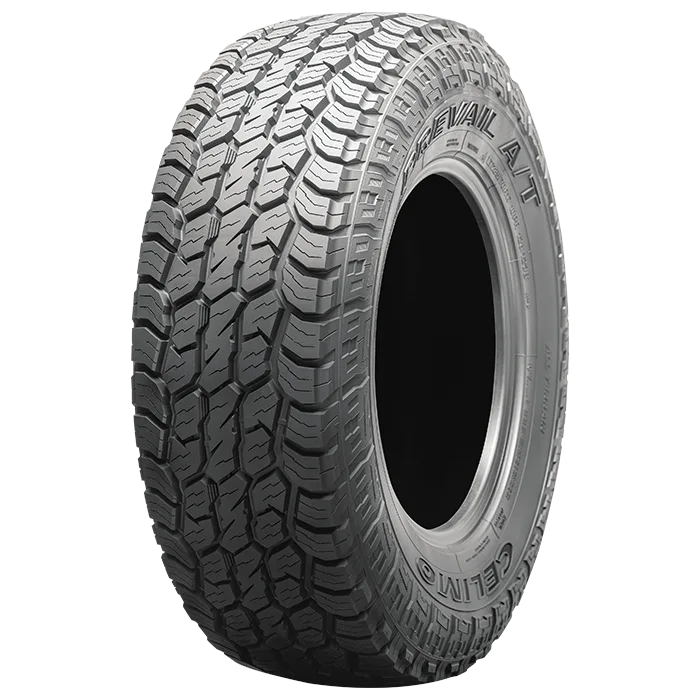
All-Terrain
Best For: Trucks and SUVs that mix commuting with gravel, job sites or trails

Open shoulders and chunkier tread blocks bite into dirt, gravel and packed trails while staying civil on the highway. Many all-terrain tires also carry the three-peak mountain snowflake mark for winter use.
Trade-Offs: More tread noise, a slightly firmer ride and a small hit to fuel economy compared with a highway tire.
Mud-Terrain
Best For: Serious off-roading, deep mud and rockVery large, widely spaced lugs claw through mud and clear themselves as they spin, and tough sidewalls resist rocks and ruts. Nothing on this list goes further off the pavement.
Trade-Offs: Loud on the highway, harsher over bumps, less sure on wet pavement and the hardest on fuel. Most drivers never need them.
Light-Truck And Commercial
Best For: Work trucks, vans, towing and heavy haulingLight-truck (LT) tires use a heavier internal construction and a load range letter such as D or E, so they carry more weight at higher inflation pressure. Commercial designs add durability for daily fleet miles.
Trade-Offs: The stiffer build rides harder and weighs more, which is wasted if you rarely carry a load. Always match the load range to your placard.
Run-Flat
Best For: Vehicles the manufacturer equips with them, where a spare will not fit

Reinforced sidewalls let you keep driving for a limited distance at reduced speed after a puncture, so you can get to a shop instead of changing a tire on the shoulder of the Beltway.
Trade-Offs: Heavier, with a firmer ride and more noise, and a puncture often cannot be repaired. Ask us before you switch a vehicle to or from run-flats.
EV-Specific
Best For: Electric vehicles, from compact hatchbacks to heavy SUVs

Electric cars are heavy and deliver instant torque, so these tires use reinforced construction, low rolling resistance to protect range and noise-damping features to keep the cabin quiet.
Trade-Offs: Not every EV needs one. A well-chosen conventional touring tire in the right load rating can be a fine fit, so check your vehicle's requirements first.
Compare Tire Types Side By Side
Use the table to see where each family is strong and where it gives ground. Ratings show general tendencies within each type, and individual models vary, so treat them as a starting point rather than a promise.
| Tire Type | Handling | Comfort | Tread Life | Quietness | Off-Road Ability | Fuel Economy / Range |
|---|---|---|---|---|---|---|
| Touring And Grand Touring | Medium | High | High | High | Low | High |
| Performance And Ultra-High-Performance | High | Medium | Low | Medium | Low | Medium |
| Highway And All-Season Passenger | Medium | High | High | High | Low | Medium |
| All-Terrain | Medium | Medium | Medium | Medium | Medium | Medium |
| Mud-Terrain | Low | Low | Low | Low | High | Low |
| Light-Truck And Commercial | Medium | Low | High | Medium | Low | Medium |
| Run-Flat | Medium | Low | Medium | Low | Low | Medium |
| EV-Specific | Medium | High | Medium | High | Low | High |
Fuel economy and range follow rolling resistance and weight. Tread life also depends heavily on inflation pressure, alignment and how often you rotate.


Which Type Fits My Driving?
Tell us what you drive and what matters most, and we will point to the tire type that usually fits. It is a starting point, and our team can confirm the exact tire for your vehicle.
Your Recommendation Appears Here
Choose a vehicle and what matters most to see the tire type that suits you.


Mixing And Rotating Tire Types
Choosing the right type is half the job. How you combine and care for the tires matters just as much, especially with Maryland's humid summers, cold snaps and pothole season.
Keep One Type On All Four Wheels
Two different types on one vehicle grip and flex differently, so the car can feel unbalanced in a sudden stop or a wet corner. Keep the same type, size and load rating on every wheel, and never put a light-truck tire beside a passenger tire.


All-Wheel Drive Is Picky About Tread Depth
A tire that is worn much more or less than its neighbors turns at a different speed and can strain an all-wheel-drive system. If one tire is damaged, ask us about matching the tread depth rather than replacing just one.


Do Not Casually Mix Run-Flats And Standard Tires
Run-flat and standard tires ride and respond differently, and a vehicle designed around run-flats may not carry a spare or a sealant kit. Follow your owner's manual, and check with us before you change.
Rotate On Schedule, In The Right Pattern
Rotation evens out wear. Front-wheel-drive vehicles usually move the front tires straight back and cross the rears forward, while rear- and four-wheel-drive vehicles often use the opposite. Directional tires only swap front to back on the same side, and differently sized front and rear tires cannot cross over. Your owner's manual gives the interval and pattern.


Changing Types Mid-Life
You can move to a different type, such as from all-season to all-terrain, as long as the size still fits and the load index and speed rating meet or beat the original. Expect the ride and noise to change.Frequently Asked Questions
Keep Learning
Related Guides
Tire Season
All-season, all-weather, winter and summer tires for Maryland roads.
Related Guides
Load Index & Load Range
How much weight each tire can carry, and what XL, C, D and E mean.
Related Guides
Tire Size
Decode any size on your sidewall, from P-metric to flotation.
Shop Tires
Shop All-Terrain Tires
Tread built for gravel, job sites and weekend trails.
Shop Tires
Car & CUV Tires
Touring, all-season and performance tires for cars and crossovers.
Shop Tires
Truck & SUV Tires
Highway, all-terrain and LT tires for pickups and SUVs.
Services
Mobile Tire Service
We bring the tires and the tools to your home or workplace.



Not Sure Where To Start?
Tell us your vehicle or tire size and we'll show you what fits. Browse the catalog, book a visit to our Upper Marlboro shop, or have us come to you.