
Tire Guide
The Complete Tire Guide
Every mark on a tire's sidewall tells you something. This guide explains size, type, season, load, speed and quality grades in plain language, so you can shop with confidence and keep your tires in good shape between visits to our Upper Marlboro shop.
Tire Size
Quick Answer
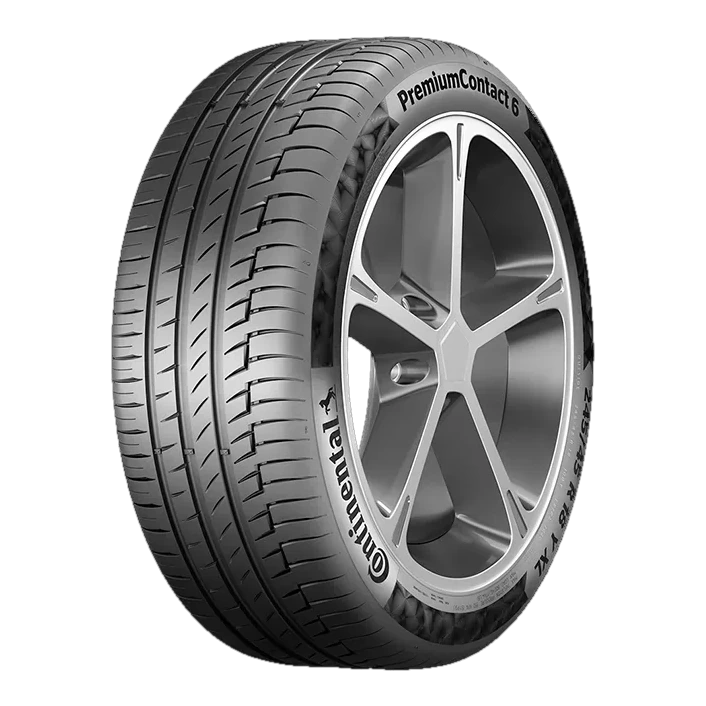
A size such as 225/45R17 gives the tire's width in millimeters, its sidewall height as a percentage of that width, its construction and the wheel diameter in inches.
Size is the first thing to match when you replace tires. You'll find it molded into the sidewall and printed on the placard inside the driver's door. The numbers and letter that follow it, such as 91V, add the load index and speed rating. The right size keeps your speedometer reading true and the tire clear of the suspension and fenders.
- Width
- 225 mm
- Aspect Ratio
- 45%
- Construction
- R = Radial
- Rim Diameter
- 18 in
- Sidewall Height
- 101 mm
- Overall Diameter
- 26.0 in · 660 mm
- Revolutions Per Mile
- 777
The bench decodes 225/45R18. The caliper reads the width, 225 mm. The height gauge reads the sidewall, 225 × 45% = 101.3 mm. The R means radial construction, and the rim gauge reads 18 in (457.2 mm). Overall diameter is 2 × 101.3 + 457.2 = 659.7 mm (26.0 in), about 777 revolutions per mile. Decode Your Own Size

Tire Type
Quick Answer
Touring and all-season tires favor comfort and long tread life, performance tires favor grip and steering feel, and all-terrain or mud-terrain tires trade some road manners for traction off the pavement.
The best type depends on your vehicle and how you use it. Most sedans and crossovers are well served by a touring or all-season design, while pickups and SUVs that see gravel, job sites or trails benefit from an all-terrain tread. Light-truck (LT) tires add sturdier construction for towing and heavy loads.
- The Turret, One Tread Per Face
- The Footprint On The Paper
- Dials, Left To Right: Off-Road Ability, Quietness, Tread Life
Each face of the turret carries one tire type's tread: closed, evenly spaced blocks for highway, wide grooves around a solid center rib for performance, open shoulders and chunky blocks for all-terrain, and very large, widely spaced lugs for mud-terrain. The more open the print, the better it bites into dirt and mud, and the more road noise comes with it. The dials show the ratings from the comparison table for the type just printed. The treads are drawn to illustrate each type, not copied from a specific tire.
Tire Season
Quick Answer
All-season tires handle wet roads and light snow, all-weather tires add the three-peak mountain snowflake mark for real winter traction, and winter tires stay flexible and grippy in the cold, on ice and in deep snow.
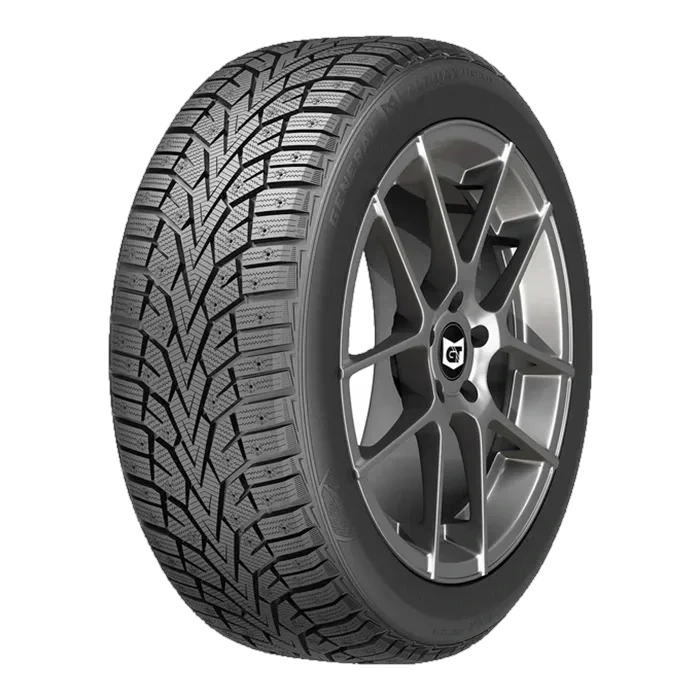
Maryland winters bring a handful of snow and ice days, so many local drivers keep all-season tires on year-round. If you commute before the plows come through, drive rural roads or simply want more margin in a storm, an all-weather or dedicated winter tire is worth a look. Summer tires give the sharpest grip in warm weather but aren't built for snow or freezing temperatures.
- Left: Summer Compound
- Middle: All-Season With M+S
- Right: Winter With M+S And The Snowflake
Three tread blocks under the same load in a cold chamber. Above 45°F (7°C) all three flex. Below it the summer block stiffens and its gauge reads less flex, many all-season compounds stiffen partly, and the winter block keeps flexing while frost forms on the glass. The curves are illustrative, and 45°F is a rule of thumb, not a switch.
Load Index & Load Range
Quick Answer
The load index is a number that stands for how much weight one tire can carry at its maximum pressure. The load range letter, such as C, D or E, shows how strongly a light-truck tire is built.
A tire with a load index of 91 is rated for up to 1,356 pounds, while a 121 truck tire is rated for up to 3,197 pounds. Replacement tires should match or exceed the load rating on your door placard. It matters most on trucks, vans and SUVs that tow or haul, where Extra Load (XL) and LT tires are common.
The tire on test is a P225/45R17 91V, rated for 615 kg (1,356 lbs) at its maximum pressure. Each weight brings the press to the next load index, from 82 (475 kg) to 112 (1,120 kg). At 91 the pointer meets the stop at the tire's rated load. At 100 and above the same tire is past its rating, which is why a replacement needs a load index equal to or higher than the one on the placard. The squash is drawn in proportion to the load, not to scale.
Speed Rating
Quick Answer
The speed rating is the letter after the load index. It marks the highest speed the tire is certified to sustain while carrying its rated load, from S (112 mph) and T (118 mph) up to V (149 mph) and beyond.
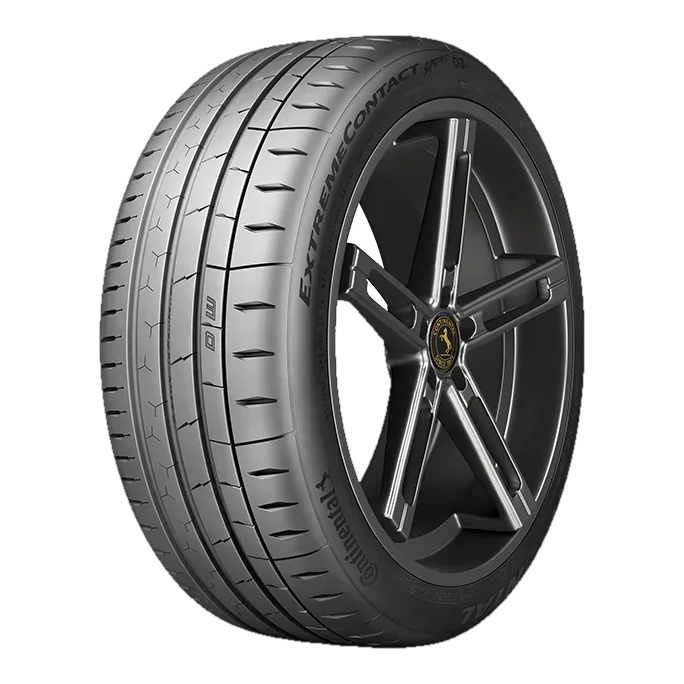
A higher rating reflects a tire built to manage more heat and stress, which is why sporty cars often leave the factory on H, V or W rated tires. Choose a rating equal to or higher than the one your vehicle came with. The rating describes tested capability, not a safe driving speed, so posted limits and road conditions still come first.
In a lab, a tire is pressed against a large steel drum while it carries its rated load, and the drum spins it up to the speed its letter stands for, from L at 75 mph (120 km/h) to Y at 186 mph (300 km/h). The tachometer reads that speed, with a dot for every letter, and the gauge over the tread shows the tire warming as the speed rises. It is a tested capability, not a speed to drive.

UTQG Ratings
Quick Answer
UTQG is a three-part grade on most passenger tires: a treadwear number, a traction grade from AA down to C, and a temperature grade from A down to C.
The grades come from standardized tests that each tire maker runs under federal rules, so they're most useful for comparing tires from the same brand. A treadwear grade of 600 points to longer wear than 400 under test conditions, but real mileage depends on driving habits, inflation and upkeep. Light-truck and dedicated winter tires are generally exempt, so some tires carry no UTQG grades at all.
A test bench for the line Treadwear 500 Traction A Temperature A. The knob moves the test tire from station to station. A dial gauge reads how much tread it lost next to a course tire graded 100: a 500 loses about a fifth as much, so it is rated to wear about five times as long. A sled on a wet plate pulls a spring scale into the C, B, A or AA band for wet straight-line braking. A drum spins the tire faster until it can no longer shed the heat: A holds above 115 mph, B from 100 to 115 and C from 85 to 100. Each maker grades its own tires, so compare treadwear within one brand's line.
Tire Maintenance
Quick Answer
Check pressure once a month while the tires are cold, rotate them on the schedule in your owner's manual, and replace them before the tread wears to 2/32 of an inch, the depth below which a tire fails a Maryland safety inspection.
The correct pressure is on the placard inside the driver's door, not on the tire itself. Regular rotation evens out wear, and balancing smooths out vibration at highway speed. Look the sidewalls over for bulges or cuts, and read the DOT date code: many tire and vehicle makers suggest replacing tires somewhere between six and ten years old, even with tread left.
A 225/60R17 tire carrying an example 1,000 lb load on a glass footprint table. The gauge on the crown reads the depth of the center groove: 10/32 in when new, 4/32 in when it is time to plan ahead, and 2/32 in, the depth below which a tire fails a Maryland safety inspection, where the wear bars sit flush with the tread. The gauge on the valve stem reads the pressure, and the mirror under the glass shows the footprint: about 29 sq in at an example 35 psi placard, about 38 sq in at 26 psi, low enough for the warning light (it comes on near 26.3 psi, about a quarter below the placard), and about 23 sq in at a 44 psi sidewall maximum. Low pressure puts the load on the shoulders and high pressure puts it on the center. The tread is drawn 5 times deeper than scale so the wear shows.

Not Sure Where To Start?
Tell us your vehicle or tire size and we'll show you what fits. Browse the catalog, book a visit to our Upper Marlboro shop, or have us come to you.