Tire Rotation: How Often to Do It and Which Pattern Your Vehicle Needs
Find out how often to rotate tires, why even wear matters, which pattern fits your AWD, 4WD, EV or staggered setup, and when to do it yourself or book it.
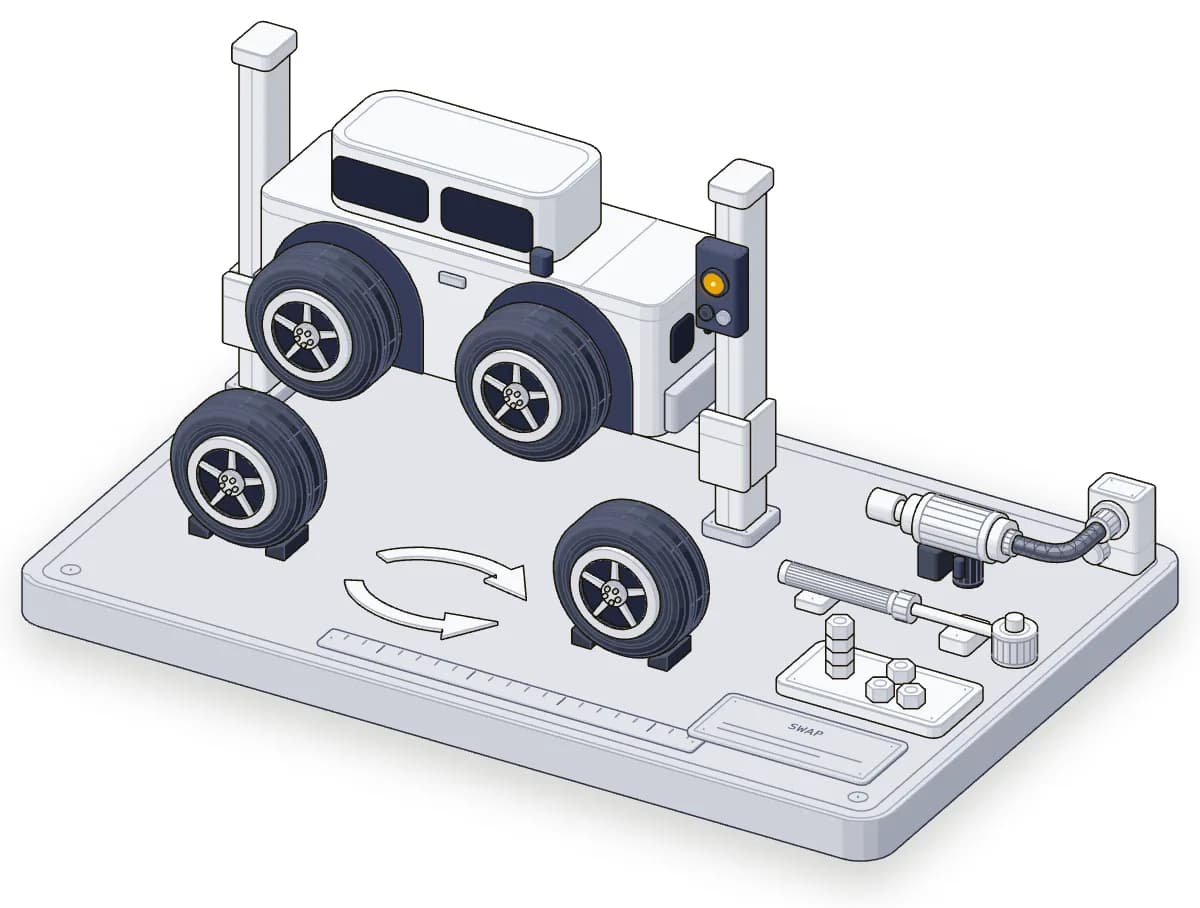
Every tire on your vehicle does a different job, so every tire wears at its own pace. Rotation moves them between positions so the work is shared. Here is how often to do it, which pattern applies to your setup and how to handle it safely.
Why Rotation Matters
Front tires steer, take most of the braking load and, on a front-wheel-drive vehicle, put the power down too. Rear tires mostly follow along. Left alone, the front pair can wear out well ahead of the rears, and you end up with two good tires and two tired ones.
Rotating moves each tire through different positions so all four wear down at close to the same rate. That keeps grip and braking more consistent from corner to corner, keeps road noise from creeping up as one axle wears ragged, and lets you replace all four tires together instead of splitting the job.
How Often to Rotate
Start with your owner's manual. Most list a rotation interval in the maintenance schedule, and the tire maker may publish its own. Those two sources outrank any rule of thumb, including ours.
When neither gives a number, a common range is roughly 5,000 to 8,000 miles, which for many drivers lands near every other oil change. Shorten it if you tow, carry heavy loads or spend a lot of time in stop-and-go traffic, because those habits wear tires faster. If you drive very little, tie rotation to a calendar reminder or your seasonal tire changeover instead of waiting on the odometer. Our tire maintenance guide covers the rest of the routine.
Ready to Schedule a Rotation?
Skip the jack stands. The tire rotation and balancing page explains the service and how to book it.