After Salt and Slush: Pressure Checks and Warning Signs
After a winter of salt and slush, check tire pressure, listen and feel for changes on the road, and learn the signs that mean a shop should take a look.
Step 3: Check Pressure
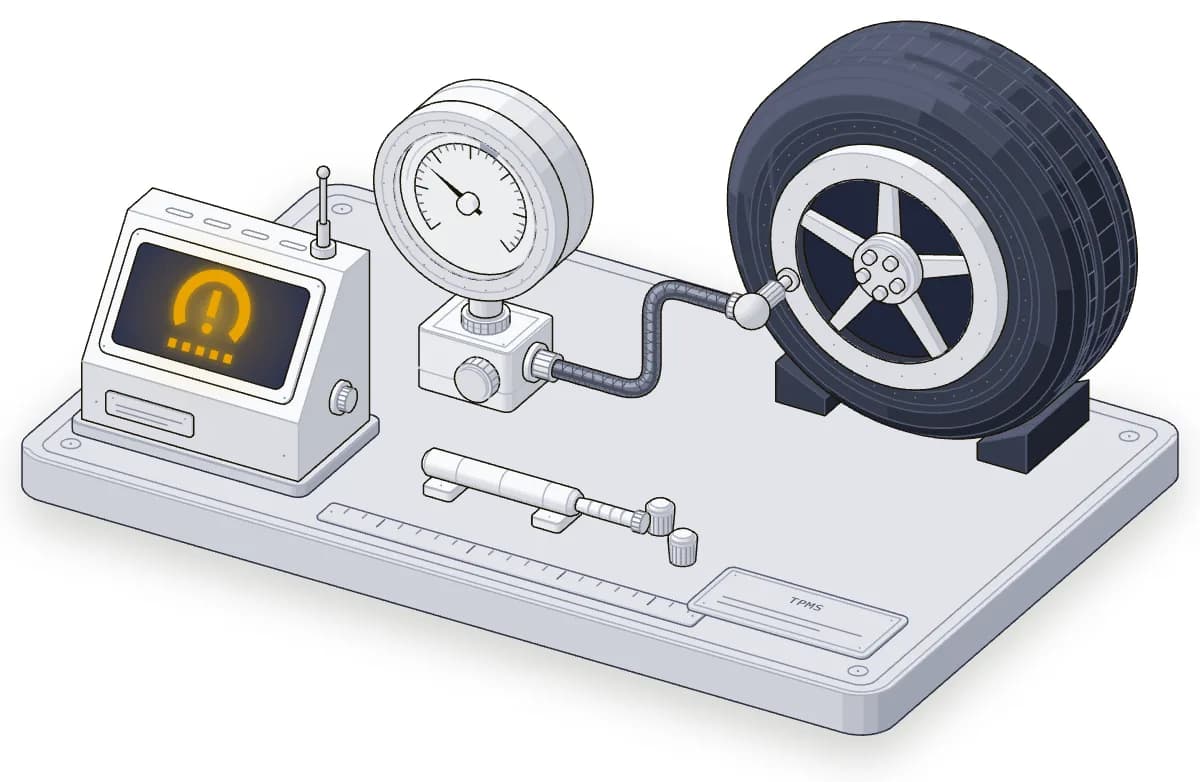
A cold week lowers tire pressure readings. Check with a gauge when the tires are cold, meaning the car has sat for a few hours, and inflate to the number on the driver's door-jamb placard, not the maximum on the sidewall. If the pressure warning light came on, our article on why the light comes on in the cold explains what to check.
Step 4: Listen and Feel
Over the next few drives, pay attention to:
- Vibration in the steering wheel or seat, which can point to balance or wear. See our article on why a steering wheel shakes.
- A pull to one side.
- A new noise from a tire or wheel.
Signs You Should Have a Shop Look
- A bulge, bubble or deep cut in a sidewall.
- Air loss that returns after inflating.
- A vibration that did not exist before the storm.
- A pressure light that stays on.
Book a Quick Inspection
If you would rather have a professional eye on it, book a visit and we will look over your tires. Regular tire rotation and balancing also gives us a chance to check each tire. If the trip to the shop is the problem, our mobile tire service comes to you within about 30 miles of Upper Marlboro, Monday to Friday.
Frequently Asked Questions
Cold air can lower the reading, so check with a gauge when the tires are cold and inflate to the door-jamb placard number.
What Did I Miss About Salt And Slush Care?
- After a storm, rinse off road treatment and slush when you can, then look over each tire and wheel for damage.
- Check tire pressure after a cold stretch, because cold air lowers the reading.
- If you see bulges, cuts, vibration or a light that will not go out, have a shop take a look.
Keep Your Tires Ready
Book an appointment for a free tread check, or browse the tire catalog if it is time for replacements.