




TPMS
Drag Across To Change The Pressure · Arrow Keys Work TooTire 35 psi · Lamp Off
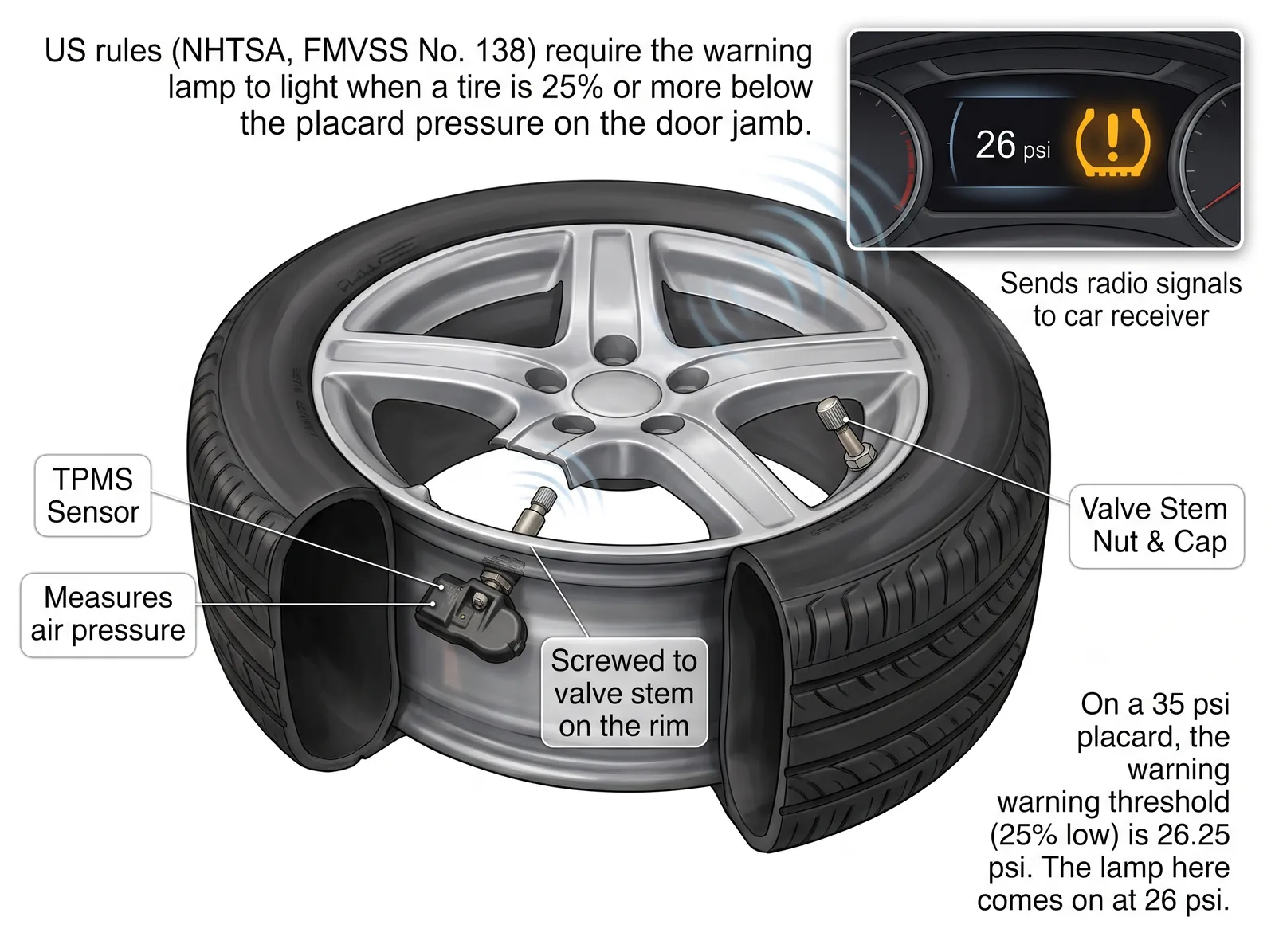
TPMS Sensor On The Valve StemLow-Pressure Warning LampA wheel lying face up with a quarter of the tire cut away. The TPMS sensor sits inside the tire, screwed to the valve stem on the rim, and measures the air pressure; the stem's nut and cap show on the wheel face. The sensor sends its reading by radio to a receiver in the car, which shows the last pressure it was sent. US rules (NHTSA, FMVSS No. 138) require the warning lamp to light when a tire is 25% or more below the placard pressure on the door jamb. On a 35 psi placard that line is 26.25 psi, so the lamp here comes on at 26 psi.

Tires & Installation

TPMS Service In Upper Marlboro

Tire pressure light on? We read the system to find which sensor or tire is the problem, replace sensors that have failed, and program them to your vehicle. Come to the shop, or we'll come to you.

Continental tiresToyo tiresMilestar tiresHankook tiresYokohama tiresVogue tiresGeneral tiresWestlake tiresCelimo tires
  1. What The Light Means

  2. A Steady Light

    Usually at least one tire is low, often by about a quarter of its target pressure. It's a prompt to check, not a sign a tire is flat.
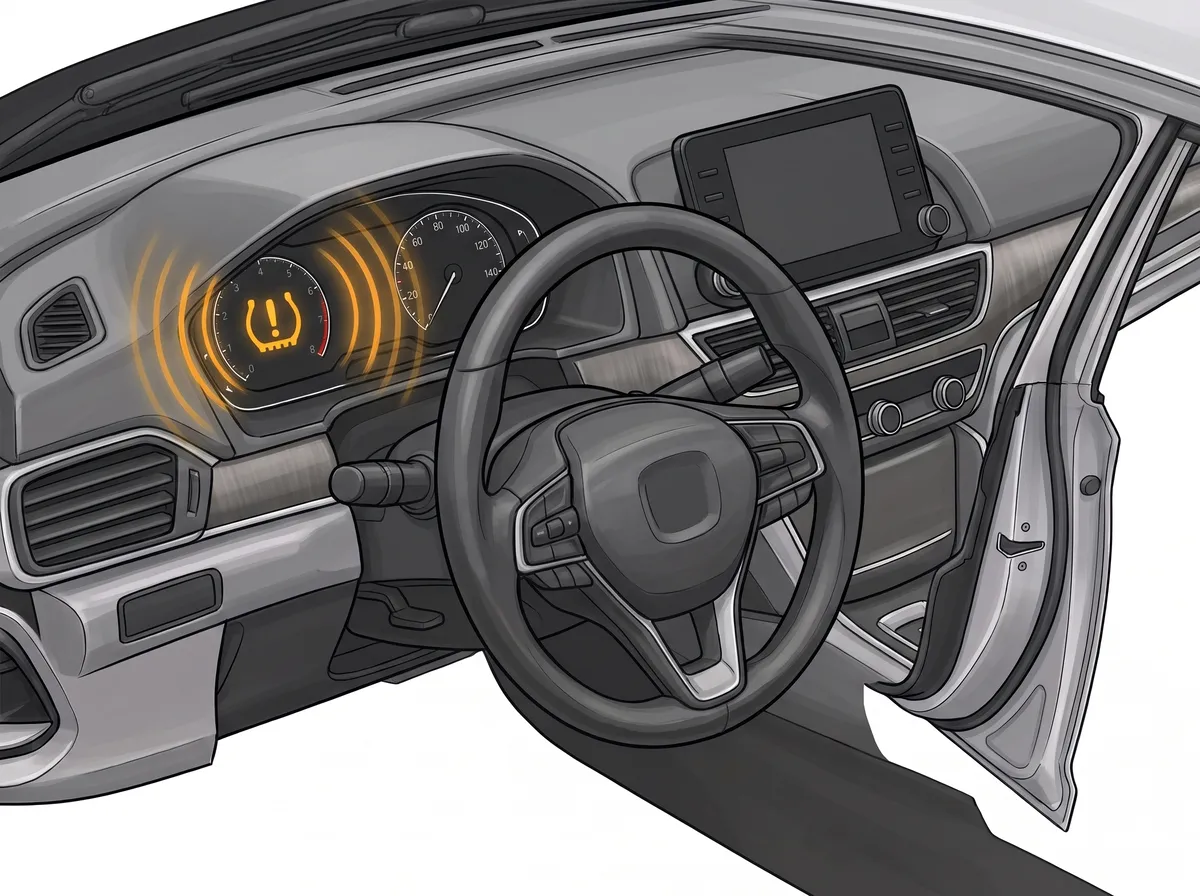
    Inside a car, the amber TPMS warning lamp is lit and glowing on the instrument cluster.
  3. Flashes, Then Stays On

    A light that flashes for about a minute at start-up and then stays on usually points to a sensor or system fault rather than low air.
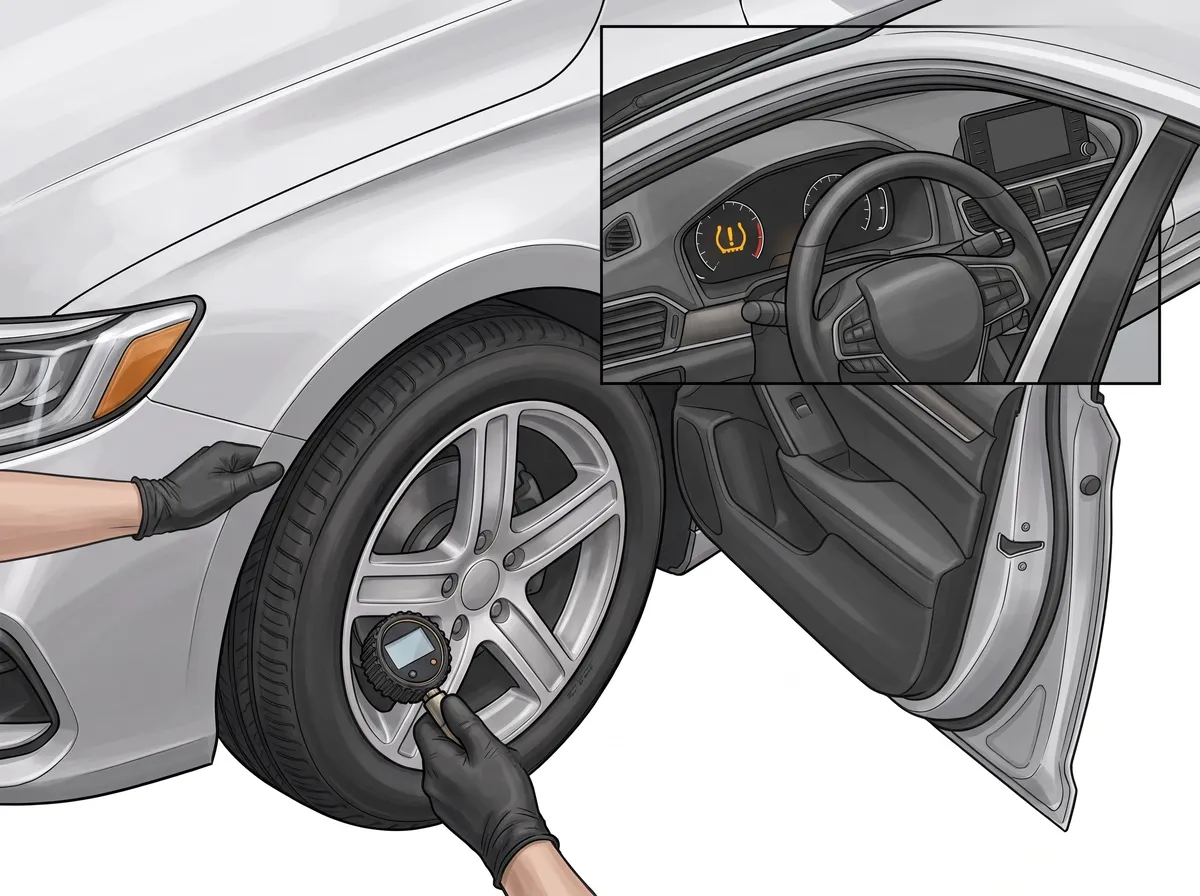
    A silver sedan with a gauge on the valve stem of a tire, and an inset of the dash with the amber TPMS lamp lit.
  4. Check With A Gauge First

    Check all four tires with a gauge against the placard on the driver's door jamb, and add air to any that are low. If the light stays on after the pressure is right, bring the car in and we'll find out why.
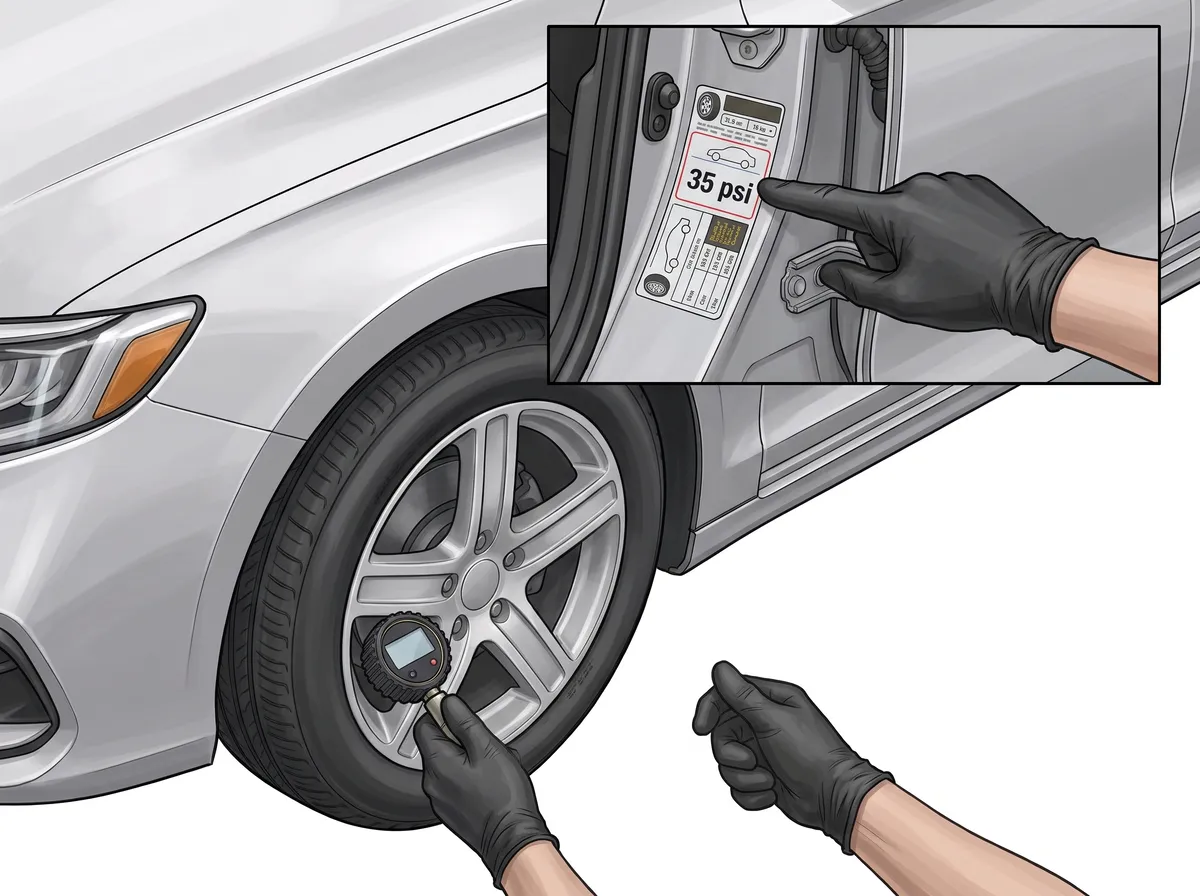
    A gloved hand holds a digital gauge on the valve stem of a silver sedan's tire, with an inset of the door jamb placard reading 35 psi.
  1. What We Do

  2. Labelled cut-away diagram of a tire and wheel. The TPMS sensor is screwed to the valve stem on the rim, inside the tire, and measures the air pressure. The valve stem nut and cap show on the wheel face. The sensor sends radio signals to the car's receiver, and the dashboard shows the pressure, 26 psi, with the low-pressure warning lamp. Under US rule FMVSS 138, the lamp must come on when a tire is 25% or more below the placard pressure.
  3. Diagnose

    We read the system to find which sensor or tire is setting off the warning, so nobody is guessing.
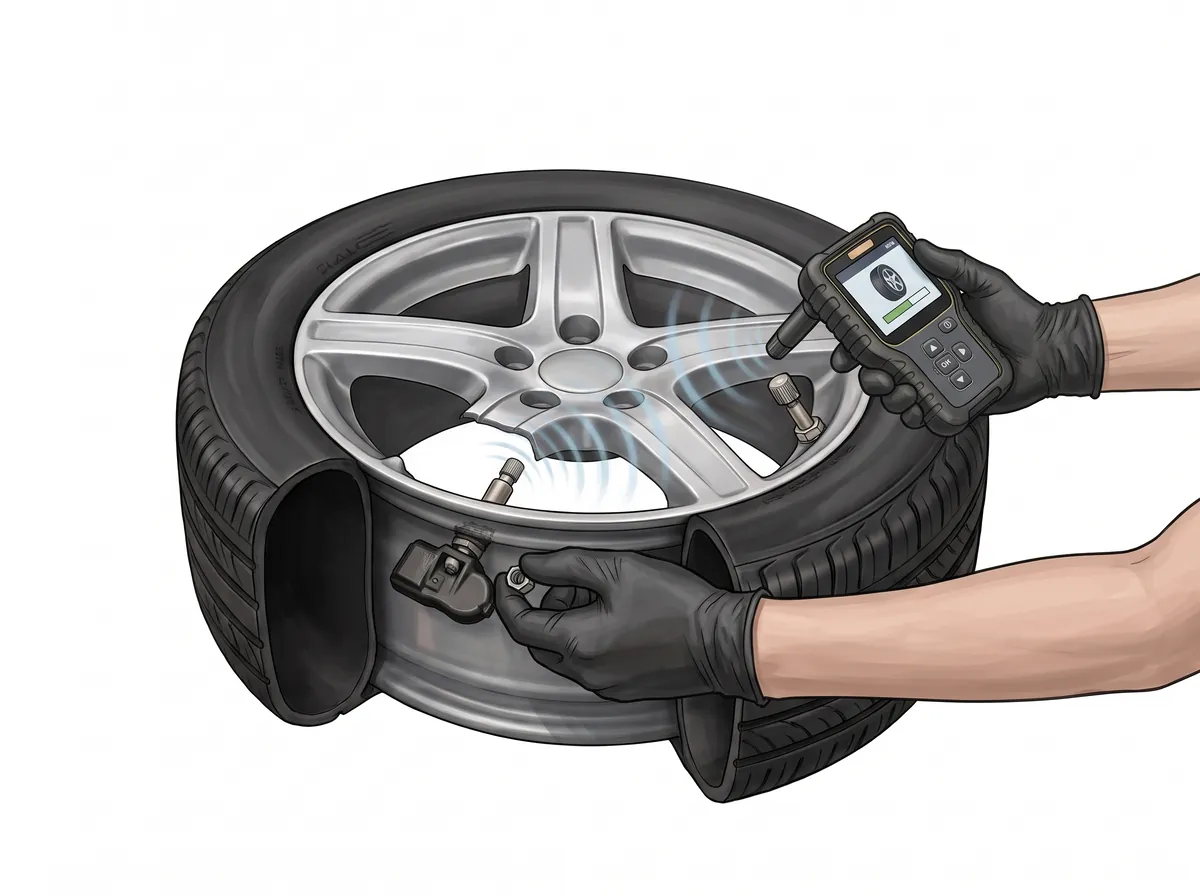
    Gloved hands hold a TPMS scan tool to a cut-away wheel while radio waves carry the sensor reading to the tool.
  4. Replace The Sensor

    If a sensor has failed, we replace it.
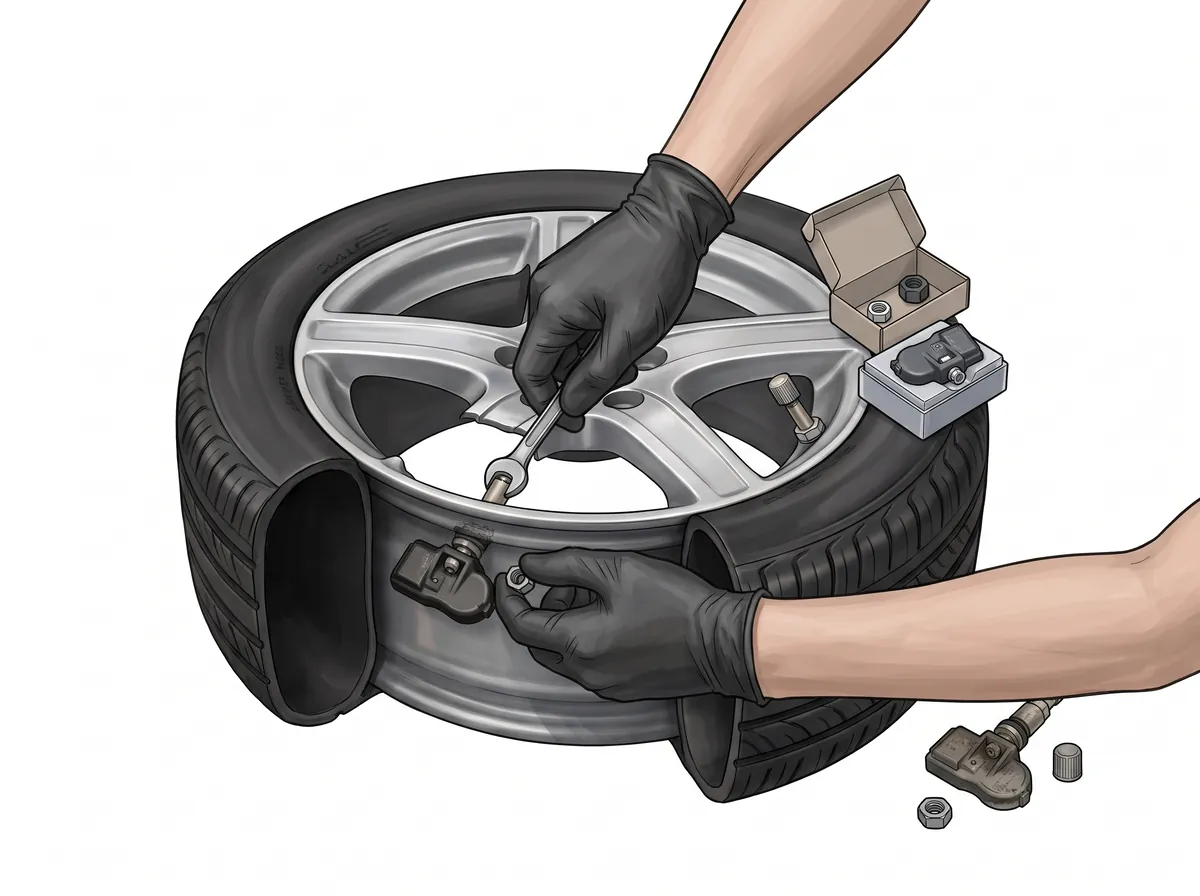
    A technician fits a new TPMS sensor into the wheel, with the old sensor on the ground and the new sensor in its box.
  5. Relearn To Your Vehicle

    We program the new sensor so your vehicle recognizes it.
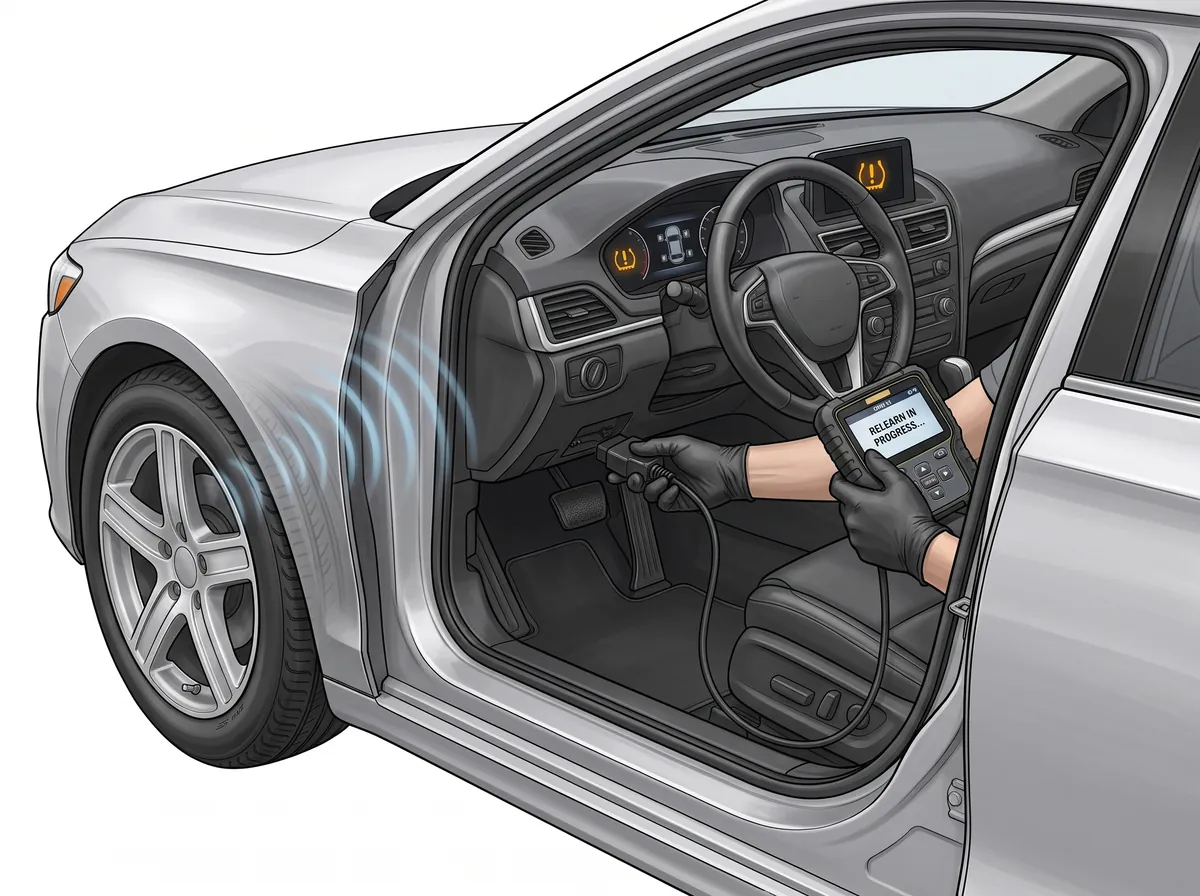
    An OBD tool plugged in under the dash shows Relearn In Progress while waves link it to the wheel sensor.

At The Shop Or Where You Are

At The Shop

Bring the car to 6303 Crain Hwy, Upper Marlboro, MD 20772. We're open Monday to Friday, 8:00am to 7:00pm, and Saturday, 8:00am to 6:00pm.

On A Mobile Visit

We come to you within about 30 miles of the Upper Marlboro shop, Monday to Friday, 8:00am to 7:00pm. No weekends.

Mobile tire service →

TPMS Questions

Usually that at least one tire is low, often by about a quarter of its target pressure. It's a prompt to check, not a sign a tire is flat. Check all four with a gauge and add air; if the light stays on after the pressure is right, we can find out why.

Call Us About Your TPMS Light

Tell us what the light is doing and what you drive. We're at 6303 Crain Hwy, Upper Marlboro, MD 20772, or we'll come to you.

  • Mon–Fri8:00 AM – 7:00 PM
  • Sat8:00 AM – 6:00 PM
  • SunClosed