Trailer Tire Checklist: Age, Sidewalls and Pressure
The first three trailer tire checks before the season: the DOT date code and age, sidewall cracks and damage, and setting pressure to the right number.
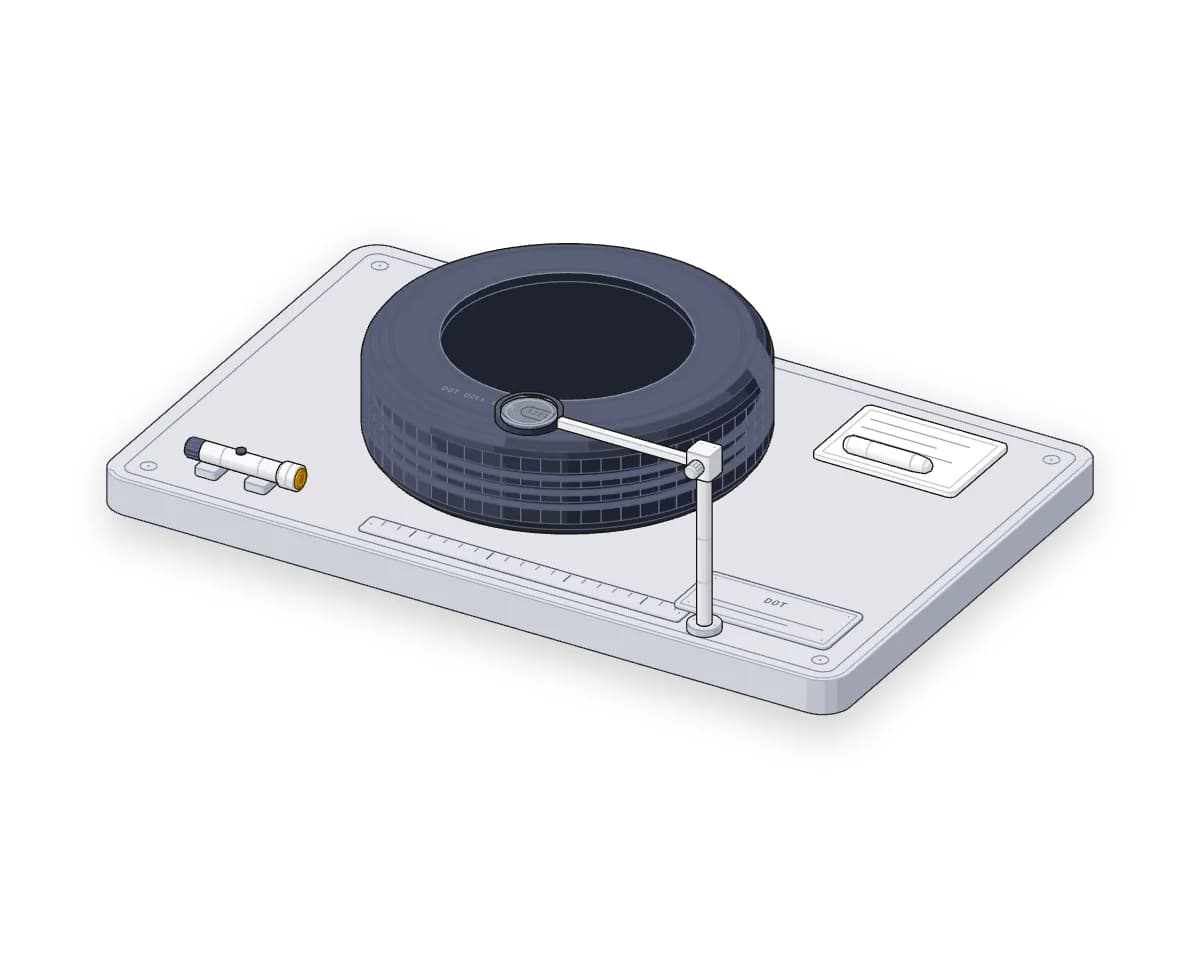
Step 1: Age and Date Code
Tires age even when they are not used. Find the date code, the last four digits of the DOT number: two digits for the week, two for the year. Some manufacturers recommend replacing tires at six to ten years regardless of tread, and tires past ten years should be replaced. Even properly stored, unmounted tires have a useful life of roughly six to ten years. Our article on reading a DOT date code shows how.
Trailers often outlast their tires by a lot, so check every tire, including the spare.
Step 2: Sidewall Cracks and Damage
A trailer that sat in the sun all winter is exactly where age shows up. Look closely at both sidewalls of every tire.
- Bulges or bubbles mean internal damage. Do not tow on that tire.
- Deep cuts mean replacement.
- Cracks should be looked at by a professional.
Sidewall damage cannot be safely repaired, unlike some tread punctures.
Step 3: Pressure
Check pressure when the tires are cold, using a reliable gauge, and set it based on your trailer's placard or manual and the tire manufacturer's information. The maximum on the sidewall is a ceiling, not a target. If you are not sure what the right number is for your trailer and tire, bring it in and we will read it with you. Check the spare too.
Frequently Asked Questions
Some manufacturers recommend replacing tires at six to ten years regardless of tread, and tires past ten years should be replaced.
Ready for the Season
Book an appointment and we will look over your trailer tires before the first trip.