Cold Snap, Warning Light: Why Your Tire Pressure Light Comes On When the Temperature Drops
The tire pressure light often shows up on the first frosty morning. Learn what it means, how to tell a cold snap from a real leak, and what to do next.
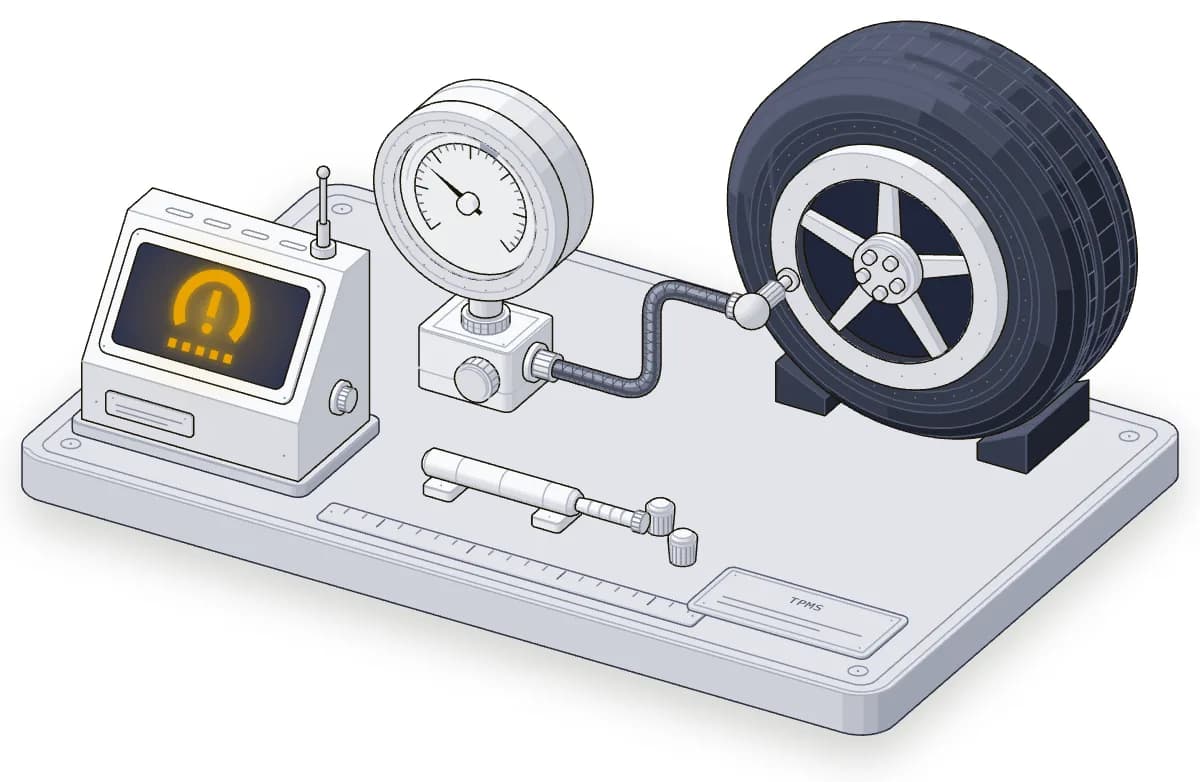
It is a familiar scene: the first frosty morning of the year, a school run to make, and a little yellow tire symbol lit on the dashboard. Before you panic, here is what that light means and how to sort a cold-morning warning from a real problem.
What the Light Is
The Tire Pressure Monitoring System (TPMS) is an electronic safety system that alerts you when a tire's pressure drops dangerously low. It has been required on vehicles sold in the U.S. since 2007. The warning light is usually a horseshoe shape or a tire outline with an exclamation mark.
There are two kinds of system:
- Direct TPMS uses a small sensor mounted inside each wheel or valve stem to measure pressure and send it to the vehicle's computer every few seconds. It is very accurate.
- Indirect TPMS watches wheel speed through the ABS sensors. A tire with low pressure is slightly smaller and spins faster, so the system infers the problem. It is less precise and needs no wheel-mounted sensors.
When the Light Comes On
The light typically comes on when a tire is about 25 percent below the recommended pressure. On a typical vehicle, that is a loss of 6 to 7 PSI. It does not mean the tire is punctured. The light can reflect a temperature drop, a slow leak or a sensor problem.
Three Likely Causes
- The temperature dropped. Cold air can lower the pressure reading. A tire that was fine yesterday can be low enough to trigger the light after a cold night.
- A slow leak. A small puncture, a leaking valve or a rim issue can lose air over days. If the light returns after you inflate, suspect this.
- A sensor fault. Direct sensors typically last seven to ten years, and they can fail from weather exposure, corrosion, damage or a depleted battery.
Frequently Asked Questions
Not necessarily. It can mean a temperature drop, a slow leak or a sensor problem. Check every tire with a gauge.
Need a Second Opinion?
Book an appointment and we will check your tires, or call the shop with any questions.