All-Season vs All-Weather vs Winter Tires in Plain Terms
All-season, all-weather and winter tires in plain terms: what each is built for, where each falls short in the cold, and a side-by-side comparison table.
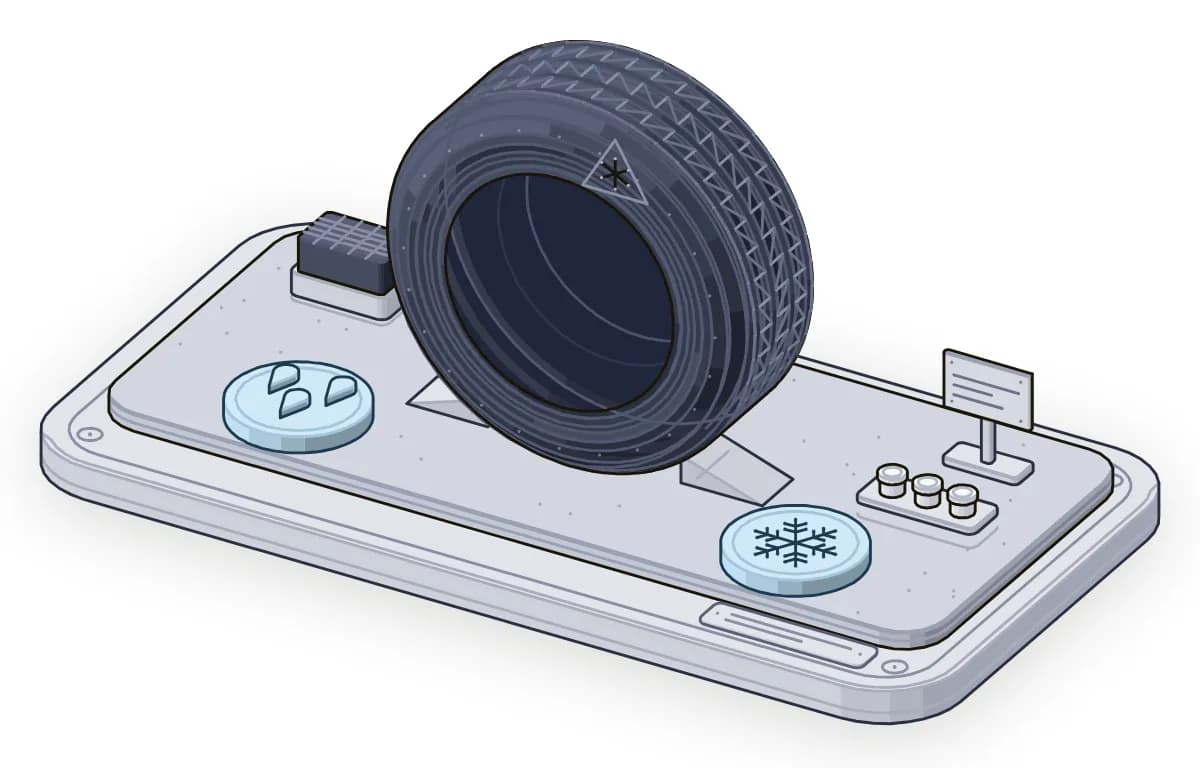
The Three Choices in Plain Terms
All-Season Tires
All-season tires are built to handle wet roads, dry roads and light snow all year, and they are the most common tire on passenger vehicles. They are a balanced compromise rather than a winter specialist. As temperatures drop, all-season rubber gets harder, and in severe winter conditions they are not equal to a true winter tire. For mild-to-moderate winters with regular road treatment, they are often acceptable.
All-Weather Tires
All-weather tires are year-round tires that also carry the three-peak mountain snowflake symbol. They give better snow traction than a standard all-season tire, but they still cannot match a dedicated winter tire in severe cold or heavy snow. They fit regions with seasonal snowfall and reliable plowing, which describes most of Maryland well, and there is nothing to swap in spring.
Winter Tires
Winter tires are engineered for temperatures below roughly 45 degrees, plus ice and snow. Their softer rubber stays flexible in the cold, and their tread has small cuts called sipes that add grip on slick surfaces. The trade-off is that they wear faster in warm weather and handle poorly on warm, dry pavement, so they are meant for the cold months, roughly October through April, and then come off.
Side-by-Side Comparison
| Feature | All-Season | All-Weather | Winter |
|---|---|---|---|
| Mountain Snowflake Symbol | Not required | Yes | Yes |
| Snow and Ice Traction | Light snow | Better than all-season | Strongest of the three |
| Warm-Weather Use | Yes | Yes | Not recommended |
| Seasonal Swap Needed | No | No | Yes, twice a year |
| Best Fit | Mild winters, short commutes | One set, seasonal snowfall | Frequent winter driving, rural or hilly routes |
Frequently Asked Questions
It is not recommended. Winter tires wear faster in warm weather and handle poorly on warm, dry roads. If you want one set for the whole year, all-weather tires are designed for that.
Ready to Choose?
See what is available for your vehicle in the tire catalog, or book an appointment and we will help you pick the right type for the way you drive.